 pdf
Contact
Hours
Hours
2


Diana Harland, BS, CCRC, received her degree in Microbiology from the University of Texas at El Paso. She worked in pre-clinical research in retrovirology while in undergraduate school, and again after graduation at Texas Biomedical Research Institute (formerly Southwest Foundation for Biomedical Research) in San Antonio, Texas. While at SWFBR, she worked in the department of Virology and Immunology at biosafety level 3-4 (BSL-3/BSL-4). She has extensive training in NIH, OSHA, and CDC guidelines for sterility and asepsis in tissue culture and retrovirology. She holds a certificate in bioterrorism from Tulane University School of Public Health and Tropical Medicine and the University of Alabama at Birmingham School of Public Health. She is a member of the Austin Disaster Relief Network (infrastructure for the city of Austin, TX disaster response), and the Association for Clinical Research Professionals.
Editing done by Cheryl Duksta, RN, ADN, M.Ed., is a critical care nurse and current member of the American Association of Critical Care Nurses. She has 15 years of publishing experience, specifically, writing and editing educational and health-related books and journals. A master's-prepared teacher, Cheryl has experience in curriculum development at the state and national level and she also serves as a publishing consultant.
Upon completion of this course, the learner will be able to:
The purpose of this course is to give the healthcare professional an overview of the hepatitis B disease, with emphasis on the understanding of serological markers and the treatment of chronic hepatitis.
Hepatitis B is a highly contagious bloodborne viral infection of the liver caused by the hepatitis B virus (HBV). Infection can range in severity from mild and short term (acute hepatitis B) to severe and long term (chronic hepatitis B). Chronic hepatitis B that is left untreated can lead to cirrhosis (scarring) of the liver, hepatocellular carcinoma (HCC), and liver failure.
It is estimated that one-third of the world's population (over 2.3 billion people) have been infected with the hepatitis B virus at one point in their lives and that about 350 million people worldwide are chronic carriers of the virus. Figure 1 shows the most current worldwide prevalence of chronic HBV infection. The CDC estimates that 800,000 to 1.4 million Americans are infected with chronic hepatitis B and as many as two-thirds of them do not know that they are infected and that they can unknowingly spread the virus. For these reasons, hepatitis B is a significant occupational hazard for healthcare workers. Fortunately, rates of acute hepatitis B in the U.S. have been declining since 1990 due to routine vaccination of children.
Figure 1:
Prevalence of Global Chronic Infection with Hepatitis B Virus 2006
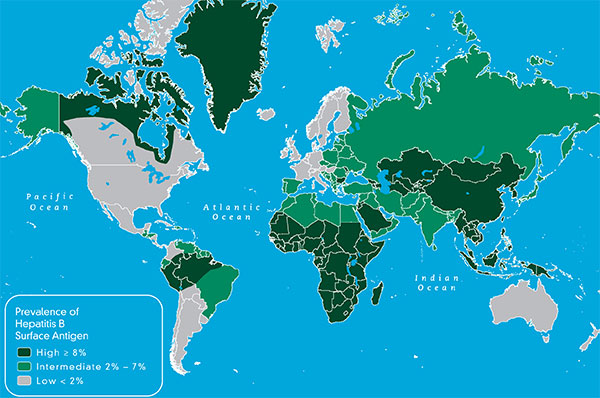
Figure courtesy of CDC.
Other viruses that cause hepatitis include hepatitis A virus (HAV), hepatitis C virus (HCV), and hepatitis D virus (HDV). HDV can only cause infection if HBV is first present and can be in the form of a coinfection with HBV or a superinfection that presents after a person has been infected with HBV for some time.
The HBV virus is classified in the orthohepadnavirus genus and the hepadnavirus family of viruses, "hepa" from the Latin word meaning "liver," and "dna" from the fact that it is a DNA virus. It is one of the smallest animal viruses, consisting of an outer lipid envelope with a protein core. The genetic material (or genome) is composed of circular DNA that is not completely double stranded. Figure 2 shows a transmission electron micrograph of hepatitis B virions.
Figure 2:
Transmission electron micrograph showing several large round hepatitis B virions.
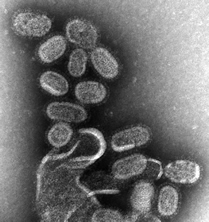
Photo courtesy of CDC.
In 1965, Nobel Prize-winning scientist Baruch Blumberg was working with fellow scientist Harvey Alter to study the serum from hemophiliac and leukemia patients who had received multiple blood transfusions. They noticed that the serum from one hemophiliac patient reacted with a sample of serum from an Aboriginal Australian. They called the newly discovered antigen the "Australia antigen." In 1968, the link between the Australia antigen as being a part of the virus that caused "serum hepatitis" was confirmed by virologist Alfred Prince, and the antigen was later renamed as the hepatitis B surface antigen (HBsAg). In 1972, laws were passed that required donated blood to be tested for HBsAg, and thereafter, acquiring HBV from blood transfusions became a rare occurrence. Hepatitis B virus was the first human disease-causing virus to be sequenced (identification of the exact order of DNA bases in the genome), making recombinant vaccine research possible. In 1986, following more years of research, a vaccine produced from recombinant HBsAg made from yeast cells (rather than producing HBsAg derived from blood plasma) was approved by the Food and Drug Administration (FDA). This is the current vaccine in use today.
When a person becomes infected with HBV, the virus is transported by the bloodstream to the liver. This is the primary site for viral replication. The highest concentration of HBV is found in blood, and lower concentrations are also found in other body fluids, such as semen, vaginal secretions, wound exudates, and saliva.
The hepatitis B virus is 50-100 times more infectious than the human immunodeficiency virus (HIV). Unlike HIV, it is resistant to heat and cold and can survive outside the body on surfaces for a minimum of 7 days and possibly up to weeks, even when visible blood is absent.
Because of great efforts to immunize children at a very early age, the rate of new hepatitis B infections in the U.S. has decreased dramatically by 82% since 1991 when routine vaccination of HBV began. In 2009, the CDC estimated that 38,000 persons in the U.S. were newly infected with HBV. Estimates by the CDC must take into account the fact that many HBV infections are either asymptomatic or never reported. Estimated numbers will therefore be tenfold more than actual numbers.
Hepatitis B is endemic in China and regions of Asia. Asians and Pacific Islanders are particularly at risk for hepatitis B. In the United States, this group of people makes up less than 5% of the population but accounts for more than 50% of Americans living with chronic hepatitis B. Most were infected as young children. Liver cancer from HBV is a leading cause of death among Asians and Pacific Islanders, and they are 7 times more likely to die from hepatitis B than are Caucasians.
Persons infected with HBV may also be coinfected with HIV. These persons are at increased risk for developing chronic HBV, and are at increased risk for serious medical complications including liver-related morbidity and mortality. Liver disease from coinfection of HIV and HBV or HCV is now the most common non-AIDS related cause of death in this population.
Statistics from the CDC show that 10-40% of persons seeking treatment for STDs have evidence of previous or current hepatitis B infection. A CDC study showed that 39% of adults diagnosed with HBV had previously sought care for an STD or had been screened for an STD. For these reasons, the CDC highly recommends vaccination of at-risk persons who have or are seeking treatment for an STD.
The AFP tumor marker
Alpha-fetoprotein is a protein produced in high levels by the fetal liver. After birth, levels decline rapidly, and in healthy non-pregnant adults, AFP is detectable only in very low levels. The AFP test is used to diagnose cancers of the liver and monitor patients with chronic liver disease because levels can be elevated with liver damage and liver cancers. This test is also ordered periodically to monitor patient response to therapy for HCC and to check for any cancer recurrence. The AFP test result is an indicator and not a diagnostic marker. Sharp increases are more important than numerical values. Because moderate elevations can be seen in other conditions, testing can yield false positives. About 60% of patients with liver cancer will have an elevated AFP, and 40% of patients with liver cancer will have an AFP test in the normal range.
It is important to identify persons with chronic HBV as soon as possible because treatment to delay or prevent onset of liver disease can be initiated. Also, further spread of the disease to others can be halted because chronic HBV carriers are the primary source of new HBV infections.
According to the CDC, identifying persons with chronic HBV permits the following:
The incubation period for hepatitis B from initial exposure can range from 6 weeks to 6 months, with an average of 2-3 months. Symptoms of HBV infection will vary by age, health, and stage of infection. In persons ≥5 years, 30-50% will show symptoms of acute disease lasting from several weeks to 6 months. Infants < 5 years and immunosuppressed individuals (e.g. HIV patients or hemodialysis patients) are usually asymptomatic. Acute HBV symptoms can range from mild to fulminant hepatitis in rare cases. Symptoms may include fever, fatigue, abdominal pain, nausea, vomiting, loss of appetite, joint pain, dark urine, and pale, clay-colored stools. Other symptoms include jaundice, liver tenderness, and possible hepatomegaly and splenomegaly. Symptoms are more severe among persons over age 60. Fatality rates, as determined by CDC surveillance, are 0.5% to 1% of cases.
Acute hepatitis can be self-limiting and may resolve with viral elimination from the blood and lasting immunity from reinfection, or the disease may progress to chronic hepatitis. Having had a resolved primary infection is not a risk factor for later occurrence of either chronic liver disease or HCC.
In cases of chronic HBV, as time progresses, the virus destroys the hepatic cells of the liver, giving them the appearance of ground glass (ground glass hepatocyte or GGH) when viewed microscopically. Macroscopically, the diseased liver becomes fibrous and orange-yellow in color as healthy cells are replaced by scar tissue and nodules.
Progression to chronic hepatitis B is inversely related to age at the time of infection. Greater than 90% of infants, 25-50% of children age 1-5, and < 5% of older children and adults will develop chronic hepatitis. Only 0.5% of chronic cases will resolve annually, and this is indicated by undetectable HBsAg levels and normal serum ALT levels.
Although some people can experience symptoms similar to those of acute hepatitis, most persons with chronic HBV will have no symptoms and no evidence of liver disease for as many as 20 to 30 years. Symptoms can range, however, from asymptomatic to cirrhosis or liver cancer in 15-25% of patients.
Diagnosis of hepatitis B is made by patient history, lab testing and evaluation of liver function tests (LFTs), and serologic testing. Patients with hepatitis B will have high levels of alanine aminotransferase (ALT or SGPT) and aspartate aminotransferase (AST or SGOT). ALT and AST may be greater than 10 times normal levels in cases of acute hepatitis. In cases of chronic hepatitis, ALT and AST may be less than four times normal values or can vary between normal and slightly increased.
There are a number of serologic tests for HBV, which alone or in combination can help the clinician identify the presence and stage of the hepatitis B disease:
All persons with positive HBsAg should be considered infectious. Persons who do not become chronically infected will be HBsAg negative by 15 weeks after symptom onset.
Testing for hepatitis B surface antigen (HBsAg) is recommended by the CDC for:
Table 1 shows CDC guidelines for the interpretation of serologic test results.
Table 1:
Interpretation of Hepatitis B Serologic Test Results
| HBsAg anti-HBc anti-HBs |
negative negative negative |
Susceptible |
| HBsAg anti-HBc anti-HBs |
negative positive positive |
Immune due to natural infection |
| HBsAg anti-HBc anti-HBs |
negative negative positive |
Immune due to hepatitis B vaccination |
| HBsAg anti-HBc lgM antin-HBc anti-HBs |
positive positive positive negative |
Acutely infected |
| HBsAg anti-HBc lgM antin-HBc anti-HBs |
positive positive negative negative |
Chronically infected |
| HBsAg anti-HBc anti-HBs |
negative positive negative |
Interpretation unclear; four possibilities:
|
Adapted from CDC
The CDC has developed criteria to provide uniform clinical and lab testing criteria for identification and reporting of hepatitis B cases. Table 2 shows the case definition criteria for identification and reporting of hepatitis B as outlined by the CDC.
Table 2:
CDC Case Definition Criteria for Identification and Reporting of Hepatitis B
| Acute Hepatitis B | Chronic Hepatitis B | |||||
|---|---|---|---|---|---|---|
| Clinical Symptoms | Acute illness with: (a) discreet onset of symptoms AND (b) Jaundice or serum ALT > 200 IU/L |
No symptoms required; no evidence of liver disease or may show a spectrum of disease ranging from chronic hepatitis to cirrhosis or liver cancer | ||||
| Laboratory Criteria | Criteria A OR Criteria B | |||||
| Any combination of the tests below performed at least 6 months apart | ||||||
| IgM anti-HBc (IgM antibody to Hepatitis B core antigen) | Positive | Negative AND A Positive to one of the following below: |
||||
| HBsAg (Hepatitis B surface antigen) | Positive | Positive | Positive 2X at least 6 months apart | |||
| IgM anti-HAV | Positive if done | |||||
| HBeAg Positive (Hepatitis B e antigen) | Positive | Positive 2X at least 6 months apart | ||||
| HBV DNA (Hepatitis B virus DNA) | ©NCCE Adapted from CDC | |||||
Adapted from CDC
Currently, there is no medication for treatment of acute HBV. Treatment consists of supportive therapy including rest, nutrition, fluids, and hospitalization when necessary.
Chronic HBV can be treated with interferon alpha-2b (IFNa-2b), PEGylated interferon alpha-2a (PEG-IFNa-2a), or other antiviral drugs, such as the nucleoside/nucleotide analog drugs lamivudine, tenofovir, adefovir dipivoxil, telbivudine, and entecavir. Goals for treatment of chronic HBV include stopping viral replication, reducing chances of further liver damage and the occurrence of HCC, and reducing infectivity. In patients who are in the latest stages of HBV disease, liver transplantation may be the only treatment option.
Patients on any antiviral therapy will undergo long periods of time on these drugs and must be monitored regularly for progression of liver disease and efficacy of treatment. Response to treatment may vary with each individual and may depend in part on the genotype of the virus and each individual's own immune system. Success of treatment is measured by:
Interferons are low molecular weight, heat stable glycoproteins that are produced by cells that have been exposed to viruses, bacteria, or chemicals. They function as a first-line of defense in response to infection. They "interfere" with viral replication. Patients with chronic hepatitis have been shown to have decreased levels of interferon production when compared to persons who are not infected; therefore, boosting interferon levels in these patients is the reasoning behind interferon treatment.
Different interferons will affect the body differently. Alpha interferons are produced in the body by leukocytes and function to inhibit viral replication, suppress cell proliferation, and regulate immune response. Alpha interferons are used to treat viral infections and cancers. Beta interferons are produced by in the body by fibroblasts and tissue type cells and are used in the treatment of multiple sclerosis. Gamma interferons are produced by lymphocytes and are used to treat chronic granulomatous disease. Interferons can also be made in the lab from recombinant DNA by taking cells grown in tissue culture and inserting genes for interferon synthesis into them. Pegylated interferons have an additional polyethylene glycol (PEG) added to the interferon through a process called pegylation (covalently coupling PEG to a larger molecule). The addition of PEG enhances the half-life of the drug, making it longer acting and enabling patients to take weekly doses rather than daily doses. When pegylated interferon alpha 2a is taken, many patients show a greater chance of achieving SVR. Individuals who have taken pegylated interferon alpha 2a have also shown improvements in liver histology. Other research has shown that alpha interferon therapy can reduce liver cirrhosis and development of HCC.
Side effects of therapeutic interferons (aches, fever, and flu like symptoms) are similar to the side effects produced by naturally made interferons in the body. Symptoms may be mild or more pronounced. The most common side effect is fatigue. Other symptoms include muscle and joint pain, malaise, flu like symptoms, fever, headache, skin irritation, rashes, hair loss, nausea, vomiting, decreased appetite, sadness, depression, insomnia, and mood changes. Side effects seen in the blood may include anemia, neutropenia, and thrombocytopenia, which should all reverse when treatment is concluded.
Patients with chronic HBV who have had clearance of HBsAg in serum may still later show reactivation of a latent viral infection. Although there may be clearance of HBsAg from serum, HBV DNA may still be detectable in the liver, in bodily secretions, and in mononuclear cells of peripheral blood. This suggests that HBV can remain in a state of low level replication or in a state that can be reactivated to again become infectious. Immunocompromised individuals (steroid use or contracting the HIV virus) are at greatest risk of relapse. Virologic recurrence is defined as an increase of HBV DNA to > 10,000 copies/ml in a person that had previously shown seroconversion and HBV DNA < 10,000 copies/ml (confirmed by consecutive samples). Serologic recurrence is defined as reappearance of HBeAg positivity (confirmed by consecutive samples) after a previous seroconversion. Current research indicates that antiretroviral drugs that are reverse transcriptase inhibitors (nucleotide and nucleoside analogs) will enable only temporary HBeAg seroconversion in most patients.
Persons exposed to HBV may be able to prevent HBV infection if given a hepatitis B vaccination and hepatitis B immune globulin (HBIG) within 24 hours of exposure. HBIG is made from the plasma of human donors who have high levels of HBsAg. Temporary immunity (for approximately three to six months) to HBV is provided by means by passive transfer of immunoglobulin. HBIG can be used for postexposure prophylaxis in conjunction with the hepatitis B vaccine in persons who are not previously vaccinated, or it can be used alone in persons who do not respond to the vaccine. A person who is exposed to an HBsAg positive source who is able to provide documented evidence of vaccination series but does not have post-vaccination testing should receive a single vaccine booster dose.
The hepatitis B vaccine is a very effective vaccine that provides greater than 90% protection to persons who have received all three doses. Vaccination is the single most important way to prevent hepatitis B. Since 1982 when it became available, over one billion people have been vaccinated worldwide with no serious side effects reported. The vaccine is contraindicated in persons who have had a previous reaction or are allergic to any of its components and in persons who are allergic to yeast because yeast is used in vaccine production.
Levels of protective antibody that can be made by the body are proportional to age at vaccination. Protective antibody levels of > 95% can be achieved in infants, children, and young adults. After age 40, protective levels are achieved in less than 90% of those vaccinated. At age 60, only 65-75% of those vaccinated will show protective levels.
Currently, there are five vaccines licensed for use in the U.S.:
The vaccine schedule for infants is first dose within 24 hours of birth; a second dose at 1-2 months of age with a minimum interval of 4 weeks between dose 1 and 2; and a third dose (from age 6 months to 18 months) no earlier than age 24 weeks with at least 16 weeks after the first dose. The vaccine schedule for adults is three doses as follows: first dose- month one; second dose-one month after the first dose; and third dose--at least two months after the second dose and at least 4 months after the second dose. Vaccines from different manufacturers may be used to complete the vaccine course because no differences in immune responses have been observed when different manufacturers' vaccines have been used. Extra doses of the vaccine are not harmful.
Booster vaccination is recommended by the CDC for:
It is important to identify pregnant women who are HBV positive (HBsAg positive) to prevent infection in newborns.(See Figure 3) Without intervention, 40% of infants born to HBV positive mothers will develop chronic HBV, and one-fourth of these infants will later die from chronic liver disease.
Figure 3:
Testing for Hepatitis B Virus Infection During Pregnancy Flowchart for Prenatal Providers

Figure courtesy of CDC.
HBV is not transferred across the placenta. Infants become perinatally infected during birth when exposed to their mother's blood. Transmission to newborns can be prevented by providing the vaccine and hepatitis immune globulin (HBIG) within 12 hours of birth.
Preventing perinatal transmission is a vital part of the national strategy to eliminate HBV infection in the U.S. By law, many states now require maternal screening and reporting of HBV. A list of states and requirements is available on the CDC website at http://www2a.cdc.gov/nip/StateVaccApp/statevaccsApp/HepatitisScreenandReport.asp.
The hepatitis B virus can survive outside the body for at least 7 days and still be capable of causing infection. Some sources have reported that the virus is capable of surviving on surfaces for up to 2 weeks. The primary way to prevent occupational exposure to any bloodborne pathogen is to diligently follow standard infection control practices, assuming that all blood and body fluids are potentially infectious. Adhering to individual facility infection control policies, including guidelines for the prevention of needlestick injury, will also prevent exposure to HBV. The practice of proper handwashing cannot be overemphasized because handwashing is still considered to be the single most effective method to prevent transmission of infection. For surfaces, the CDC recommends cleaning any blood spills or dried blood with a 1:10 dilution of household bleach. As with disinfection of all bloodborne pathogens, gloves should also be used during any decontamination procedures. For further information on infection control, please see the NCCE course entitled Science of Infection Control Principles.
The CDC Guidelines for Isolation Precautions for Preventing Transmission of Infectious Agents in Healthcare Settings is available on the CDC website at http://www.cdc.gov/hicpac/2007IP/2007isolationPrecautions.html.
Protecting yourself and your patient from transmission of hepatitis B through proper disinfecting techniques is only one of your responsibilities as a healthcare provider. You must also educate your patients on common routes of transmission and options for routine vaccinations. Your role as educator also includes identifying those at risk for the disease and providing them with information so they can protect themselves from infection. Working together, healthcare providers can continue to protect each other and the public from this disease.
Blumberg, BS. Hepatitis B: The hunt for a killer virus. New York, NY: Princeton University Press; 2002.
Centers for Disease Control and Prevention. Immunization schedules, childhood, adolescent and teen, and adult schedules. Avail at: http://www.cdc.gov/vaccines/recs/schedules/default.htm#child. Accessed May 30, 2012.
Centers for Disease Control and Prevention. Standing Orders. Admission orders for labor and delivery and newborn units to prevent hepatitis B virus (HBV) transmission. Avail at: http://www.immunize.org/catg.d/p2130.pdf. Accessed May 30, 2012.
Centers for Disease Control and Prevention. Sexually Transmitted Diseases Guidelines http://www.cdc.gov/mmwr/PDF/rr/rr5912.pdf. Accessed June 28, 2012
Gitnik GL. Medical progress. Australia antigen and the revolution in hepatology. Calif Med. Apr 1972;116(4):28-34. Avail at: http://www.ncbi.nlm.nih.gov/pmc/articles/PMC1518378/. Accessed May 30, 2012.
Lai L, Hui CK, Leung N, Lau GK. Pegylated interferon alpha-2a (40 kDa) in the treatment of chronic hepatitis B. Int J Nanomed. Sep 2006; 1(3):255-262. Avail at: http://www.ncbi.nlm.nih.gov/pmc/articles/PMC2426802/. Accessed May 30, 2012.
Lin SM, Yu ML, Lee CM, et al. Interferon therapy in HBeAg positive chronic hepatitis reduces progression to cirrhosis and hepatocellular carcinoma. J Hepatology. Jan 2007; 46(1):45-52.
Lok ASF, McMahon BJ. AASLD practice guideline update. Chronic hepatitis B: Update 2009. Avail at: http://liverlearning.aasld.org/aasld/2010/2011.practice.guidelines/document?c_id=17261&type=document
Mast EE, Margolis HS, Fiore AE, et al. A comprehensive immunization strategy to eliminate transmission of hepatitis B virus infection in the United States. MMWR. 2005; 54(RR16):1-23. Avail at: http://www.cdc.gov/mmwr/preview/mmwrhtml/rr5416a1.htm?s_cid=rr5416a1_e. Accessed May 30, 2012.
Reijnders JG, Perquin MJ, Zhang N, et al. Nucleoside analogues only induce temporary hepatitis B e antigen seroconversion in most patients with chronic hepatitis B. Gastroenterology. Aug 2010; 139(2):491-498. .
Siegel JD, Reinhart E, Jackson M, Chiarello L and the Healthcare Infection Control Practices Advisory Committee. 2007 Guideline for isolation precautions: Preventing transmission of infectious agents in healthcare settings. Avail at: http://www.cdc.gov/hicpac/pdf/isolation/Isolation2007.pdf. Accessed May 30, 2012.
Weinbaum CM, Williams I, Mast EE, et al. Centers for Disease Control. Recommendations for identification and public health management of persons with chronic hepatitis B virus infection. MMWR. 2008; 57(RR08):1-20. Avail at: http://www.cdc.gov/mmwr/preview/mmwrhtml/rr5708a1.htm. Accessed May 30, 2012.
Workowski, KA, Berman S. Centers for Disease Control. Sexually transmitted diseases treatment guidelines, 2010. MMWR Recomm Rep. 2010; 59(RR-12):80-85. Avail at: http://www.cdc.gov/mmwr/PDF/rr/rr5912.pdf. Accessed May 30, 2012.
World Health Organization. Hepatitis B factsheet. Avail at: http://www.who.int/mediacentre/factsheets/fs204/en/. Accessed May 30, 2012.
COPYRIGHT © 2026 National Center of Continuing Education, Inc. All rights reserved.